On January first, I broke two new year resolutions. To be early to every appointment/meeting and never to go out unkempt (shave my beard).
On the second? I must have broken another and not touched a book.
So should I be changing New Year resolutions or changing habits? What about you?
What is a habit?
It is a settled or regular tendency or practice, usually hard to give up, done often and regularly, sometimes without knowing you are doing it.
Habits are also the choices that all of us deliberately make at some point and then stop thinking about but continue doing, often everyday. They are actions triggered in response to associated cues.
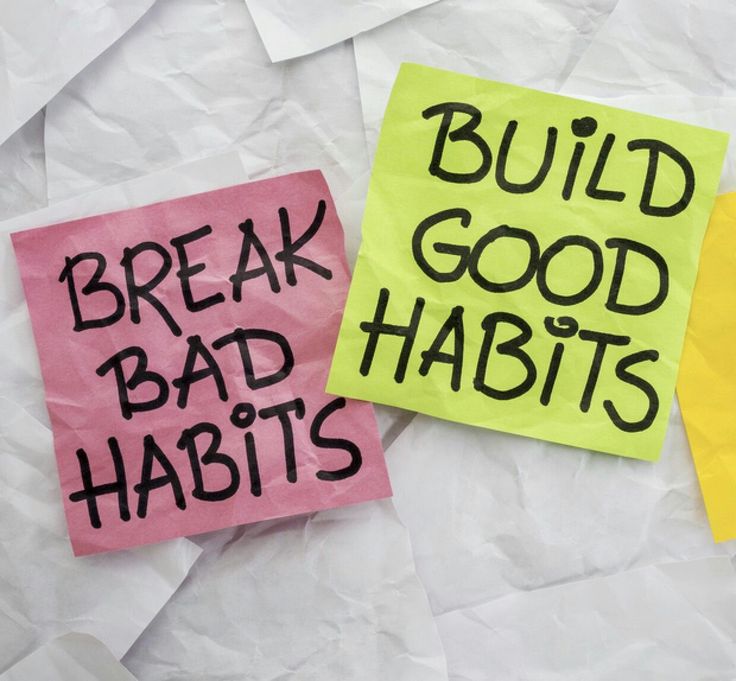
Write down 3 good and 3 bad habits of yours (if you can) on a sheet of paper at this juncture before we continue. Or just think about them.
- More than 40% of the actions people carry out each day were not decisions, but habits. Duke University Research, 2006
- Our brains want to save effort
- There is nothing you cannot do if you get your habits right
- Habit defines character
The habit Loop experiment
An experiment was conducted with a rat to see how it forms a habit. Nodes were attached to its head and it was placed in a maze with a partition with chocolate at the other side. Every time it hears the click (cue) and the partition disappears, it would wander into the maze. After finding chocolate in a particular direction the first time, it almost automatically went that way in the maze afterwards. Its actions (routine) led to a reward (chocolate). up and down the maze, sniffing in corners and scratching the walls. Each time the rat sniffed the air of scratched the walls, its brain would explode with activity as if analyzing each new scent, sight and sound.
Habits are formed and operate entirely separately from the part of the brain responsible for memory. Later tests confirmed that we learn and make unconscious choices without having to remember anything about the lesson or decision making. Your brain is constantly seeking new ways to save effort, and is always “chunking” sequences of actions into automatic routines. Backing out of the driveway, for example, requires over a dozen separate actions, but many of us do it daily without a second thought.
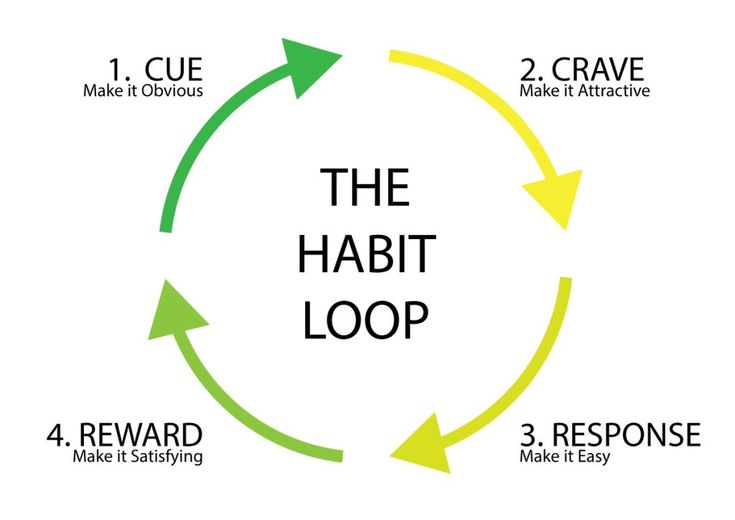
Creating the habit loop
- Cue: A trigger that tells your brain to go into automatic mode, and which routine to use.
- Routine: Physical, mental, or emotional behavior that follows the cue.
- Reward: A positive stimulus that tells your brain that the routine works well, and is worth remembering.
Good habits
- A good habit is a behaviour that is beneficial to one’s physical or mental health, often linked to a high level of discipline and self-control.
- Examples are regular exercise, balanced diet, monogamy, etc.
Bad habits
- A bad habit is a negative behaviour patter that is not beneficial to one’s physical or mental health, often linked to a low level of discipline and self-control.
- Examples are procrastination, overspending, nail-biting, gossiping, bullying, etc.
Breaking habits
Step one: identify the routine
- To break a habit you have to identify the components of the loop. The first step is to identify the routine, the behaviour you want to change.
- Next, what is the cue for the routine?
- What is the reward?
- To figure 2 and 3 you may need to do little experiments.
Step two: Experiment with rewards
- Rewards are powerful because they satisfy cravings. However, we are usually not conscious of the cravings that drive behaviour.
- To figure cravings that drive particular behaviours, experiment with different rewards.
- After each activity, note on a piece of paper. They can be emotions, random thoughts, reflections on how you feel or just words. This
- Set an alarm for 15 minutes then ask yourself ‘do you still feel the urge for your behaviour’?
Step three: Isolate the cue
There are too much information bombarding us as our behaviour unfolds. Habits cues fit into one of five categories:
- Location
- Time
- Emotional state
- Other people
- Immediate preceding action
Step four: Have a plan
Now you have figured out you habit loop, you can begin to shift behaviour. You can change the routine by planning for the cue and choosing a behaviour that delivers the reward you are craving.
Changing habits may seem difficult, but you have to be true to yourself and change a little at a time. Some ways to overcome yourself are:
- Cut yourself some slack. Habits are hard to change so do not be too hard on yourself.
- Identify the underlying cause and deal with the real problem.
- Write it down – There’s something about committing a promise to paper that makes that promise more real. Look at it daily.
- Get yourself a buddy – being accountable to someone else is a powerful incentive to keep on going. Use your friend, spouse, counselor, etc.
Changing habits
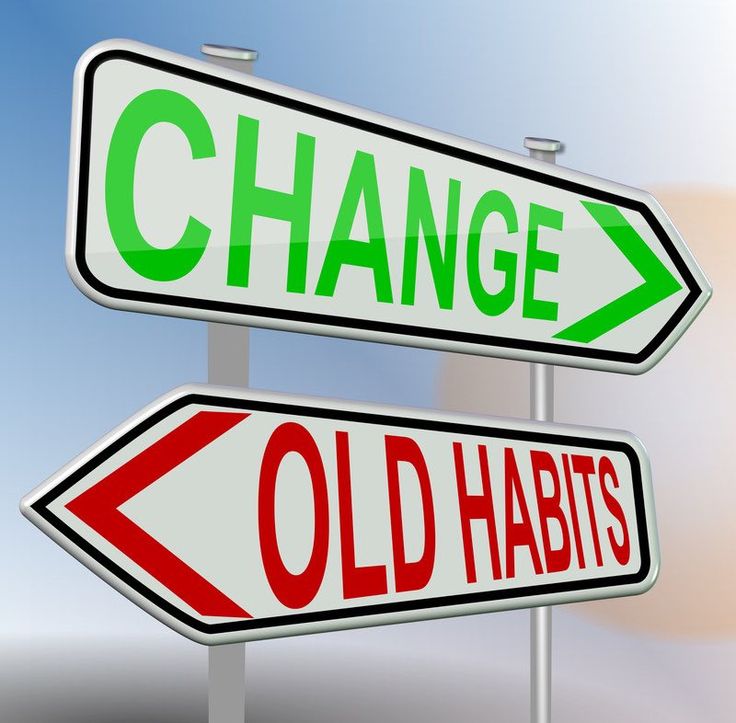
Habits can be changed. Remember – cue, change routine, reward.
Give yourself enough time and allow for slips – it is human to slip up once in a while else you will spend time brooding on the slip up and never return to complete the new routine. Think hard about why you slipped and get back up.
Habits tied to time. The Time Matrix:
- Quadrant I: Urgent/Important
- Quadrant II: Not urgent/Important
- Quadrant III: Urgent/Not Important
- Quadrant IV: Not urgent/Not Important
A major reason for stress is time management. Where do you spend most of your time?
7 habits of highly effective people
- Be proactive – prepare ahead, plan. Make things happen rather than wait for them to happen.
- Begin with the end in mind – start with the end you seek
- Put first things first – prioritize
- Think win-win – mutual benefit, ‘we’ not ‘me’
- Seek First To Understand, Then To Be Understood – listen first
- Synergize – think cooperation. You will go further
- Sharpen the saw – constantly improve yourself
Sow a thought, reap an action…
Sow an action, reap a habit…
Sow a habit, reap a character…
Sow a character, reap a destiny.
KSS BY: Mr. Ngobo Kuro John