Today is Tuesday, a day that is synonymous with Self Improvement in our HBC community. Today’s Self Improvement Tuesday will be served with a little different flavour that would be instructional to me the “teacher” as it will be to you my evaluators. (na who be the student na?)
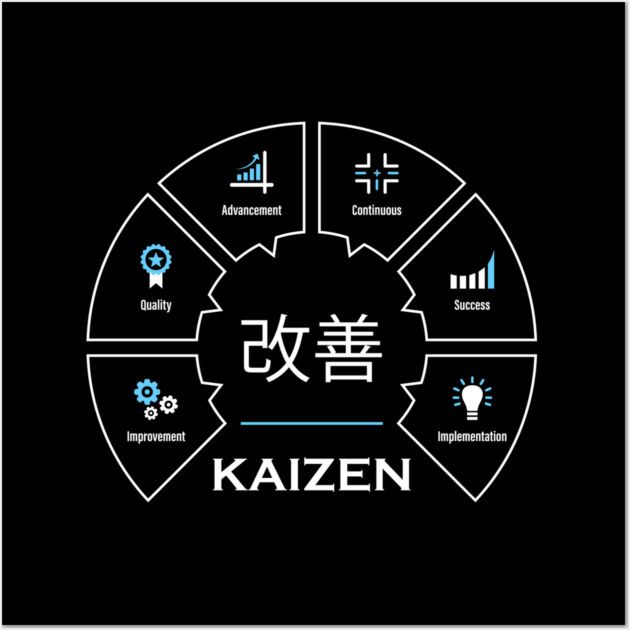
I’ll talk today about Kaizen, a Japanese word that some of us might be familiar with. Kaizen when taken apart reads: Kai= change, Zen = good. In English Kaizen is typically applied to measures for implementing continuous improvement. In fact, Kaizen is simply read to be “continuous improvement.”
One of the biggest brands that has been poster child for the success of the Kaizen principle is Toyota car brand.

The history of Kaizen begins after World War II when Toyota first implemented quality circles in its production process. This was influenced in part by American business and quality management teachers who visited the country. For these people, the task was to rebuild industrial Japan that had all but become debris after the war.
A quality circle is a group of workers performing the same or similar work, who meet regularly to identify, analyze and solve work-related problems. This revolutionary concept became very popular in Japan in the 1950s and continues to exist in the form of Kaizen groups as well as similar worker participation schemes.
In modern usage, kaizen is designed to address a particular issue over the course of a week, which is referred to as a “kaizen blitz” or “kaizen event”. A kaizen event is a focused development project that can accomplish breakthrough improvements in a short amount of time, about 2-10 days in scope. Kaizen events must have a clear, concise objective along with immediately available resources and rapid results. This ensures the results are significant, clear and quick to promote the generation of continued enthusiasm and satisfaction.
10 Principles of Kaizen
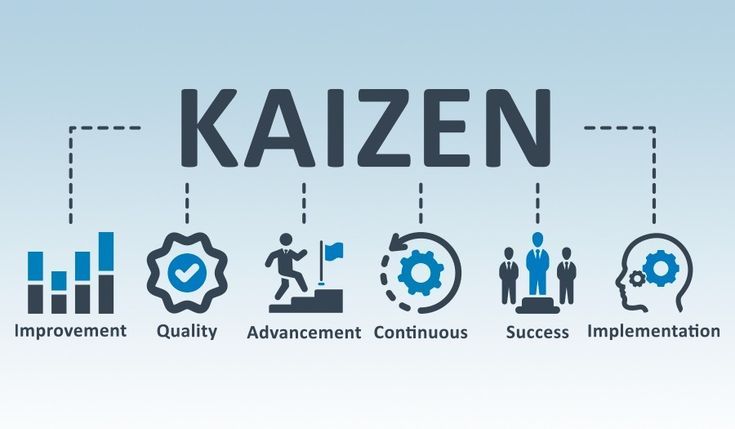
The Kaizen method follows ten specific principles, which are described below:
- Improve everything continuously.
- Abolish old, traditional concepts.
- Accept no excuses and make things happen.
- Say no to the status quo of implementing new methods and assuming they will work.
- If something is wrong, correct it.
- Empower everyone to take part in problem solving.
- Get information and opinions from multiple people.
- Before making decisions, ask “why” five times to get to the root cause. (5 Why Method)
- Be economical. Save money through small improvements and spend the saved money on further improvements.
- Remember that improvement has no limits. Never stop trying to improve.
Kaizen method strives toward perfection by eliminating waste (muda) in the workplace (gemba). The goal of kaizen is production without wastes by improving standardized activities and processes. Industrial engineer Taiichi Ohno, the father of the Toyota Production System, noticed that there is an 80% loss in every process and the value of the process is less than 20%.
The Seven Wastes (Muda) that Must be Eliminated:
A portion of micro processes functioning as part of the full process (from start to finish) do not make any transformation to the product that the consumer is willing to pay for. After analyzing manufacturing processes, Taiichi Ohno was able to identify which steps add value and which ones do not. As a result, he developed a better way for organisations to identify waste with his “Seven Wastes” model. These wastes include:
- Delay, waiting or time spent in a queue with no value being added. A large part of an individual product’s life is spent waiting to be worked on.
- Producing more than you need. Overproduction usually hides and/or generates all the others. It leads to excess inventory, which then requires the expenditure of resources on storage space and preservation. These activities do not benefit the customer.
- Over processing or undertaking non-value added activity. Over processing occurs when more work is performed on a piece than what is required by the customer.
- Transportation. Each time a product is moved, it stands the risk of being damaged, lost, delayed, etc. as well as being a cost for no added value.
- Unnecessary movement or motion. Motion refers to the damage that the production process inflicts on the entity that creates the product. This may be either over time (wear and tear for equipment and repetitive strain injuries for workers) or during discrete events (accidents that damage equipment and/or injure workers).
- Inventory. Whether it is in the form of raw materials, work-in-progress, or finished goods, represents a capital outlay that has not yet produced an income, either by the producer or for the consumer.
- Production of Defects. Defects cause extra costs for reworking the part and can sometimes result in doubling the cost of one single product.
Finally, when abnormalities or malfunctions occur, Kaizen adherent engineers (it started with engineering processes) must first go to Gemba. Gemba is a Japanese term for the “Real Place”. The Golden rule for Gemba management is called the 5 Gemba principles, which are:
- When a difficulty arises, go to the gemba first
- Check with gembutsu (machines, tools, rejects and customer complaints)
- Take temporary countermeasures on the spot
- Find out the root cause. By repeating the question, why several times you can find out the root cause of the problem.
- Standardize the prevention of reoccurrence.
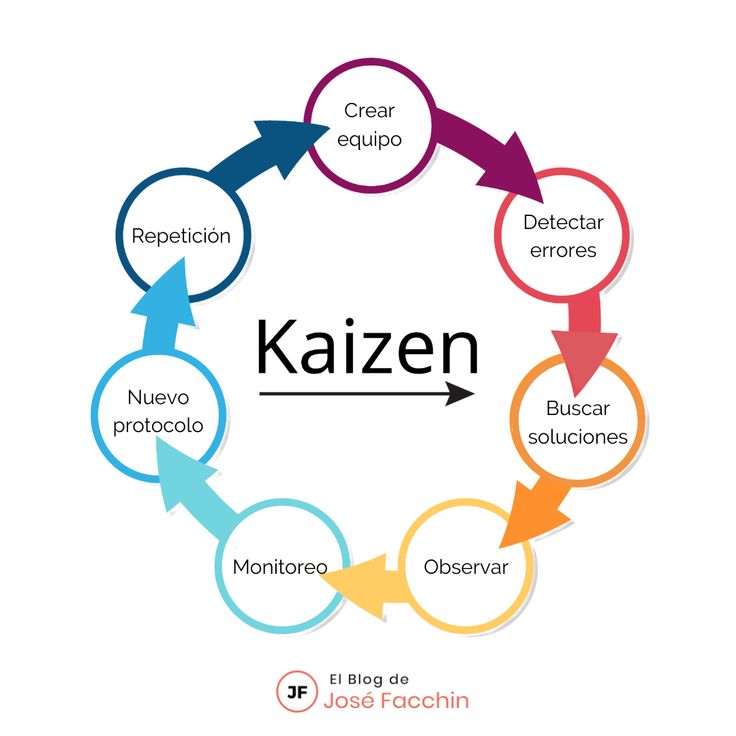
A lot of these principles would serve us well in our jobs and careers. Self improvement is also applicable in our family lives, relationships and personal lives. There isn’t a place where these truths cannot be applied (of course taking away the whole machine-machine parts). I believe that we can continue to focus on Continuous Improvement and bring ourselves closer to our goals with every day that passes.
Do have a terrific day, Hexavians.
Eizu Uwaoma
…and we are Hexavia!
Strategy. Business. Training. Retreats. Consulting
www.hexavia.net
08035202891
© Hexavia!